
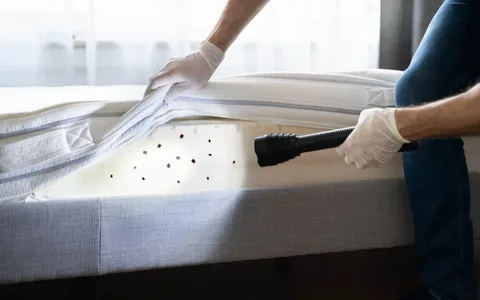
Not only can one bed bug become a staffing issue or a lost client in days, but it can also result in a negative review for the conference room. Commercial bed bug inspection can detect the issue early and can help prevent the spread of the problem. At Mark Pest, we’re here to help business owners and facility managers identify infestations quickly and keep their staff, reputation, and profits safe. This guide will explain what an inspection is, what to expect, and how to select the optimal partner.
Why Commercial Bed Bug Inspection Matters for Your Business
Bed Bugs are found on bags, coats, laptop computers, and luggage. Offices, hotels, clinics, schools, gyms, and retail all experience foot traffic and are exposed.
Early detection, low costs. Treatment is carried out once for a small infestation. A spread across the floors takes weeks, and it disrupts operations.
- When you are asked for one, a scheduled inspection will provide you with:
- Improved speed of reaction to employee/customer complaints
- Minimizing treatment expenses by intervening as early as possible
- Insurers & landlords will have documented proof of due diligence.
- Brand protection and morale support for your employees.
- In the workplace, Bed Bugs can be found in any area where people sleep or rest.
Where Bed Bugs Hide in Workplaces
Bed bugs hide close to where people sit and rest. Offices offer plenty of cover.
Inspectors check these areas first:
- Furniture, including upholstered chairs, couches, and waiting room furniture
- Seams in cubicles, desk drawers, and baseboards
- Wall outlets, picture frames and door trim
- Break room furniture and employee lockers.
- Use coat racks, storage closets, and mail rooms.
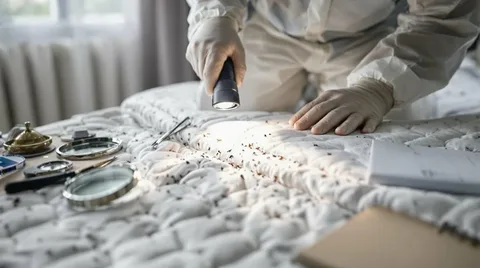
Small rust colored stains, small dark spots on fabric, shed skins, and itchy, red bites on staff/visitors are signs to report immediately.
How a Professional Commercial Pest Inspection Works
A trained technician uses a step-by-step procedure. You receive answers; you don’t get guesswork.
Step 1: Interview and History
Your inspector will ask questions about reported bites, sightings, recent renovations, and visitors. This influences the area in which the search begins.
Step 2: Visual and Tool-Assisted Search
Using a flashlight, magnifying lenses, and moisture-free tools, technicians can explore crevices, furniture, and seams. For large floor plans, many teams will include the use of canine detection or monitoring devices.
Step 3: Findings Report
A written summary is provided with definitive locations, infestation details, and recommended next steps. Save this document for your information.
Step 4: Follow-Up Monitoring
Bed bugs hide well. Repeat visits find that after treatment, the area remains free of insects.
Treatment Options After an Inspection
A good inspection leads straight into a plan. Office bed bug treatment depends on property type, infestation size, and your schedule.
- Heat treatment: Increases the temperature in the room to a level that will kill Bed Bugs at all life stages. Works in one visit.
- Targeted residual treatment: Sprays approved chemicals into cracks, seams, and harborage areas.
- Combination method: Used in high-risk areas or large areas for pairing with specific products.
- Continuous vigilance: Detects new introductions in time.
Effective workplace bed bug control also includes staff education. Teach employees to report sightings quickly and to inspect bags after travel.
How to Choose a Business Pest Management Partner
Use this checklist when comparing providers:
- State licensing and current insurance
- Experience with commercial properties, not only homes
- A written inspection report and treatment plan
- Flexible scheduling after hours or on weekends
- Discreet service that protects your brand
- Clear follow-up and warranty terms
Ask how technicians confirm results. A provider with a defined process delivers repeatable outcomes.
The Mark Pest Advantage
Mark Pest creates pest management programs for businesses that are flexible to your property and your schedule. We cater to offices, hospitality venues, healthcare facilities, and retail outlets..
What you will get when you work with us:
- Commercial Bed Bug Detection by Licensed Technicians trained in Bed Bug detection.
- Detailed reports of the inspection provided for your records.Detailed inspection report provided for your records.
- After-hours service to keep your doors open.
- Using vehicles and communications that are not noticeable.Discreet vehicles and communication.
This is to be followed by follow-up visits to confirm results.
Frequently Asked Questions
How often does a company need a commercial bed bug inspection?
For most businesses, an inspection will take place every three to six months. Quarterly visits are most beneficial for hotels, health care facilities, and shared work spaces with high foot traffic. Immediately following employee/customer complaints, schedule another inspection.
How do you know if Bed Bugs are in an office?
Symptoms include small rust-colored stains, dark spots on fabric, shed skins, and unfamiliar bites on personnel. Inspect upholstered chairs, seams, and baseboards first. If they find anything, report it to a licensed provider and have them confirm it.
What is the time duration of the commercial bed bug inspection?
The average office suite inspection is 1 to 3 hours. If the property is a larger building or multi-floor, it will take longer. Your inspector tells you how long it will take before work is done.
Will an inspection affect my business?
A professional inspection will have a minimal impact. Buildings are not open to the public, except in the areas where technicians can be found. Technicians can be found at certain locations and may be able to visit at night. Your doors are open, and your staff is productive.
How are bed bugs controlled in a commercial building?
Responsibility is contingent on the lease agreement and local laws. Building-wide treatment or tenant’s treatment of leased space. Check your lease and check with your provider to make sure you know who is responsible for what.